
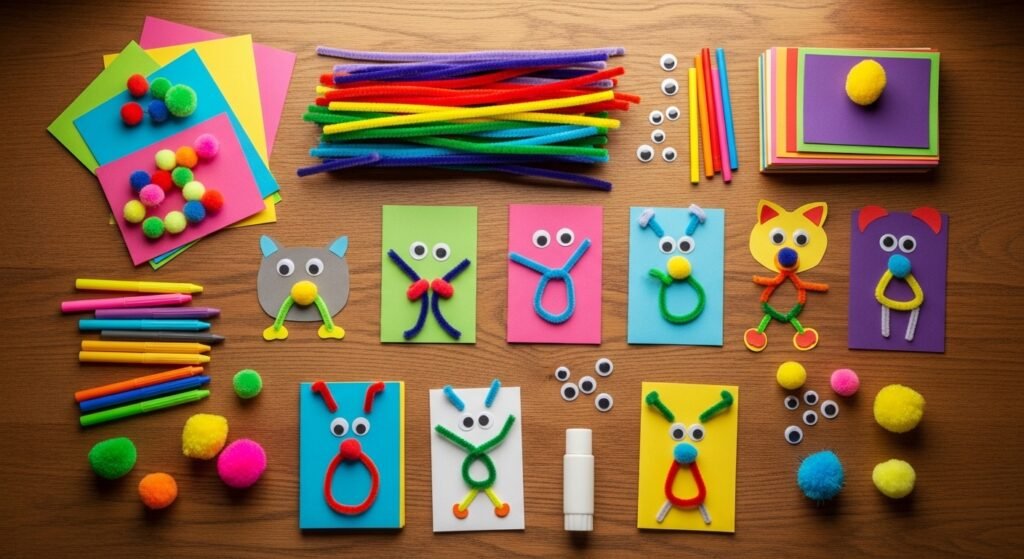
I’ve always loved a messy craft afternoon – especially when it involves diy kids crafts for beginners that actually work. When my little cousin first came over, we turned an old shoebox and some paper plates into a whole imaginary city, and I fell in love with how tiny wins build creativity.
I made this list because I know how intimidating “craft time” can feel when you’re just starting – too many materials, too many ideas, and maybe one sticky shirt. Over the years I kept the easiest, most joyful projects that use mostly household stuff, and these are the ones we go back to when I babysit or when you need a quick boredom-buster.
You’ll get 25 simple, low-mess ideas that beginners can handle, plus little tips from my own trial-and-error so you don’t make the same glue-mistakes I did. Let’s make something cute together.
These 25 Easy DIY Kids Crafts For Beginners You’ll Actually Try
Paper Plate Wind Catchers
These paper plate wind catchers are the kind of craft I made a million times as a kid – and fun fact, they still make my apartment look cheerful. I like letting kids glue tissue paper and little cut-out trees, then hang them near a sunny window. You can tell if the room is extra breezy because they start to sway – tiny victory. If you’re anything like me, leave an extra plate for “practice” because scissors and oval shapes are tricky at first.
Rainbow Cloud Fan
Making a fan shaped like clouds and rainbows is perfect for a hot afternoon – and it’s surprisingly easy. I remember folding paper with a toddler and giggling when our “fan” looked more like a crumpled hat; you win some, you learn some. This one doubles as a pretend-play prop, so if your kiddo likes dramatic weather reports, they’ll adore it.
Dinosaur Cutouts
Cutting dinosaurs from paper is a simple way to practice scissor skills and storytelling. I once taped a dozen of these to a hallway and turned it into “dino alley” – best afternoon ever. You can let kids draw their own shapes, or pre-cut silhouettes if the scissors are new to them.
Sprinkle Sorting Tray
Using an egg carton to pick up tiny sprinkles is more about fine motor skills than baking – and yes, it feels oddly satisfying. I caught myself using it as a stress-breaker once while supervising homework; it works for kids and adults, apparently. Pro tip – keep a tiny spoon handy so you don’t spill half the glitter on the floor.
Toilet Paper Crown
Who knew a toilet paper roll could be royalty? This DIY crown is one of those classics that turns a Tuesday into a coronation. I once hosted a “royal snack time” where every child got a crown – total chaos but ten out of ten on smiles. If your glue stick is tired, double up on tape – no shame.
Heart Window Ornaments
These heart-shaped “stained glass” ornaments use tissue paper and contact paper for a gorgeous window display. I made a string of them with my niece and they brightened her bedroom for weeks – the light looked so pretty at dusk. You can teach kids color mixing by layering different tissue pieces, and it’s low mess if you use a tray underneath.
Cloud Rainbow Toy
This soft cloud toy with little rainbows is a sweet, quiet project that older kids can assemble with some help. I gave one to a shy friend as a “thinking-of-you” gift and she loved the comfort it gave – tiny handmade things mean so much. If you don’t have felt, paper versions work great for beginners too.
Watermelon Paper Fan
A paper fan shaped like watermelon slices is simple and festive for summer playdates. I made a batch of these for a picnic and they were a huge hit – kids waved them like little flags. You only need basic folding and a popsicle stick for the handle, though sometimes my folds looked more like origami experiments than fans.
Simple Pinwheel
Pinwheels are classic for a reason – immediate movement and a little magic when they twirl. I taught a group of five-year-olds how to make them at a library story time and it turned into a spontaneous wind parade. If your pinwheel doesn’t spin at first, try loosening the center slightly – patience is a superpower here.
Rainbow Streamer Party
Streamers + cups + imagination = hours of fun. My cousin and I once pretended our kitchen was a tropical island and the streamers were palm leaves – messy but brilliant. These are great for sensory play and can be reused if you store them flat, which I recommend because my living room looked like confetti for two days.
Painted Egg Fun
Painting eggs is not just for holidays – they make a calming craft and a good canvas for practice strokes. I keep a handful of spare wooden eggs for rainy afternoons when the kids need a quiet activity. If you’re worried about real eggs breaking, use foam or wooden ones; your carpet will thank you.
Fish Magnets
Turning little cutouts into magnets is great for personalization and fridge art. I made tiny fish magnets with my neighbor’s kids and now every grocery list gets a colorful companion. If you glue on small magnets, press for a full minute – impatient me learned that the hard way.
Flower Streamer Craft
Mix streamers and fake flowers for a whimsical desktop bouquet that never wilts. My niece insisted hers be “very extra,” so we added glitter – yes, glitter. If you’re like me, you’ll find glitter in weird places for days, but the delighted squeal was worth it.
Paper Bird Garland
Stringing paper birds into a garland is a lovely way to decorate a playroom or a birthday backdrop. I once used clothespins to attach them to a string between two chairs and my kiddo declared it a “flying fort.” This project is fab for practicing cutting and symmetry, and it looks so sweet fluttering in the breeze.
Egg Carton Turtle
Transforming an egg carton into a turtle is peak upcycling – plus it’s sturdy for little hands. I made these during a “green crafts” day at the park and parents loved the low-cost materials. Paint the shell patterns together; my favorite part is mixing unexpected colors.
Botanical Paper Art
Simple paper shapes with pressed leaves or floral accents feel extra thoughtful and mature. I turned one of these into a homemade card for a friend’s birthday and she called it “beautifully tiny.” If you press leaves between heavy books first, they’ll behave much better during gluing.
Colorful Craft Bits
Sometimes just dumping a jar of colorful beads or buttons onto a tray and letting kids sort is the whole activity. I like to do this while we chat about colors and patterns – it’s oddly calming. Keep tweezers nearby if you want to add a fine-motor challenge.
Fruit Pen Decorating
Decorating pens with eraser toppers or washi gives kids a tiny practical reward for crafting. I once made a dozen as “school night incentives” and they actually used them for homework – miracle. If you glue small pieces on, wait until it’s dry so no one loses their favorite pen cap in week two.
Cardboard Race Track
Cutting a cardboard racetrack from old boxes is the perfect afternoon challenge for a rainy day. I remember my neighbor’s kids creating elaborate jumps and lanes – the rules changed every five minutes, naturally. It’s great for collaborative play and you can test tiny cars or figurines for speed trials.
Paper Flower Cutting
Learning to cut paper flowers builds confidence and scissor skills, and the results are adorable. I keep a stack of colored paper and let the kids make bouquets; sometimes we stick them in jars for a pretend tea party. If you have a kid who likes symmetry, teach them to fold the paper first – way easier.
Pom-Pom Turtle
Pompom animals are soft, forgiving, and silly – my kind of craft. A little green pom becomes a turtle with some googly eyes and felt feet; my sister named hers “Speedy” ironically. This project is great when you want something tactile without sharp tools.
Popsicle Stick Airplane
Building a popsicle stick airplane involves gluing, balancing, and a parade of test flights across the living room. Our first version crashed into the cat’s water bowl – yes, that happened – but we improved the design and celebrated each successful glide. Kids love customizing wings and tails, and you can keep a little workshop corner for drying planes.
Paper Plate Jellyfish
Jellyfish made from paper plates are playful, colorful, and kind of hypnotic when the strands move. I made an ocean wall with these once and it turned our hallway into a tiny aquarium – such a mood. Use ribbon or crepe paper for the tentacles; it looks so dreamy under lamplight.
Button Fish Toys
Sewing or gluing buttons onto little fabric fish is a gentle intro to simple sewing and textures. I did this with a group of seven-year-olds and one kiddo proudly used a safety needle like a champ – major confidence boost. Keep stitches simple and shallow if you want it to dry quickly for playtime.
Easy Paper Kites
Paper kites are classic and give a real “I made this” thrill when they catch the wind. I tested a few designs at the park and watching them fly was pure joy – plus it’s a good excuse to be outside. If you make them for beginners, stick to diamond shapes and light materials so they actually lift off.
How to Actually Make This Work For You
Start small and plan for a tiny cleanup routine – a towel or tray under the project saves more time than you think, and make sure materials are age-appropriate so you don’t need to step in every two minutes. Embrace imperfection; half the charm of kid crafts is that they look handmade, and if glue gets on your shirt it’s fine – laundry exists. Finally, rotate projects so novelty keeps the kids excited, and keep a simple “go-to” box of scissors, glue, and crayons ready for impromptu creativity.
What age are these crafts for?
Most projects here are great for preschoolers to early elementary kids with adult supervision, and several can be adapted for toddlers by simplifying steps. If scissors or tiny pieces are involved, stay close and help with cutting or gluing.
What basic supplies should I have?
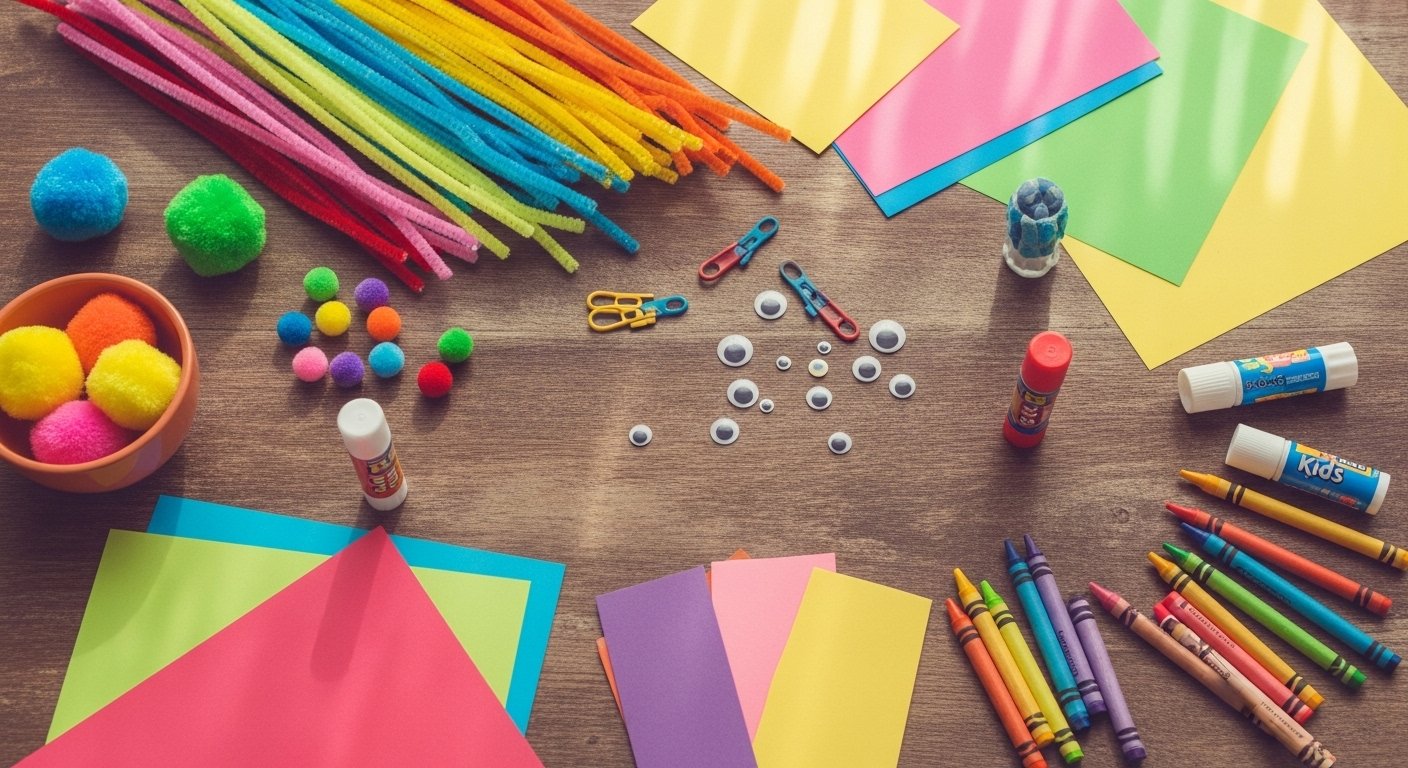
A small kit with glue sticks, non-toxic glue, safety scissors, colored paper, markers, tape, popsicle sticks, and an egg carton will cover many of these ideas. You can add googly eyes, pom-poms, and string for extra fun but keep it simple at first.
How do I manage the mess?
Containment is your friend – craft on a washable tablecloth or a baking tray, and do a quick “five-minute tidy” after every session to avoid an avalanche of bits later. It helps to give each child a small bin for scraps so they learn cleanup as part of crafting.
Can I make these crafts without buying special things?
Absolutely – most projects use household recyclables like egg cartons, paper plates, and cardboard. Look around the kitchen and recycling bin before buying supplies; creativity loves a good challenge.