



I have a serious soft spot for diy garden fence ideas – they feel like the kind of project that turns a boring yard into something personal and cozy. I still remember the first tiny fence I painted myself, wobbling a bit but making the whole place feel like mine. It’s wild what a few boards and some imagination can do.
I made this list because small-space fence projects are my jam and I wanted to collect fun, doable ideas you can actually try without a trailer full of tools. Over the years I’ve patched up scrappy fences, made a pallet planter that leaked soil everywhere (oops), and learned the tricks that save time and money. If I can do this on a tight weekend budget, you probably can too.
Below you’ll find ten friendly, achievable diy garden fence ideas with real-life tips, tiny imperfections included, and encouragement to make them your own – whether you rent, own, or are just dreaming up a balcony garden.
These 10 DIY Garden Fence Ideas You’ll Actually Try
Matching Wooden Railings
This one feels classic – matching wooden railings give a neat, cohesive look to a small yard and make everything feel intentional. I knocked out a similar setup last summer and was shocked at how polished it looked after staining the wood – no carpentry degree required. If you’re like me and hate the idea of inconsistent boards, measure twice and cut once, then breathe.
Arbor Entrance Charm
An arbor in the middle of a garden makes the fence feel like an entrance, not just a boundary, and it’s romantic without being fussy. I built a tiny one for my herb patch and ended up training a clematis on it – now guests always pause there and take a picture. You can DIY the frame from simple 2x4s and save the decorative touches for later when you feel fancy.
Rustic Stick Fence
For a truly rustic vibe, a stick fence made from uneven branches is charming and totally on-trend for cottage gardens. I love that this one doesn’t demand perfect lines – imperfections are the aesthetic, honestly – and it’s surprisingly eco-friendly if you foraged responsibly. If you’re worried about stability, anchor the main posts well and use twine or wire to lash things together so it lasts through windier months.
Classic Garden Arbor
This photo gives off strong “garden guardian” energy – an arbor that frames a path feels timeless and intentional. My neighbor built one like this and swore by using cedar for longevity, which I later confirmed after touching it two summers later and seeing zero rot. If you want a statement piece that also supports climbing plants, this is your move.
Industrial Cage Panel
Not everything needs to be wood – an industrial-style cage panel can be a quirky, urban take on a fence and doubles as a trellis. You can spray-paint it any color you like; I went for matte black once and loved the contrast with bright flowers. If you’re into slightly edgy, low-maintenance fences, this is the sort of idea that makes your yard feel modern without trying too hard.
Pallet Planter Wall
Pallets are the MVP of budget fence projects – build a pallet wall and turn the slats into planters for herbs or succulents. I built one that initially collapsed because I under-anchored it, so pro tip: screw it into posts and fill from the top down to avoid soil avalanches. Once it’s secure, though, the vertical garden payoff is huge, especially in tiny yards or balconies.
Umbrella Fence Art
This is such a playful idea – hanging colorful umbrellas on a chain link fence instantly makes the space feel joyful and personal. I once did colorful scarves on my apartment fence and neighbors peeked in like it was an art show, so expect compliments. If you use umbrellas, make sure to secure them with UV-safe ties so they don’t fly away in a storm – lesson learned.
Simple Field Fence
Sometimes the simplest fences are the most peaceful – a plain wooden fence in the middle of a field is effortlessly beautiful and low-fuss. I have a soft spot for this kind because it reads as both protective and open, like a gentle border rather than a wall. If you want privacy without drama, stain or leave it natural depending on your climate and patience level.
Vine-Clad Planters
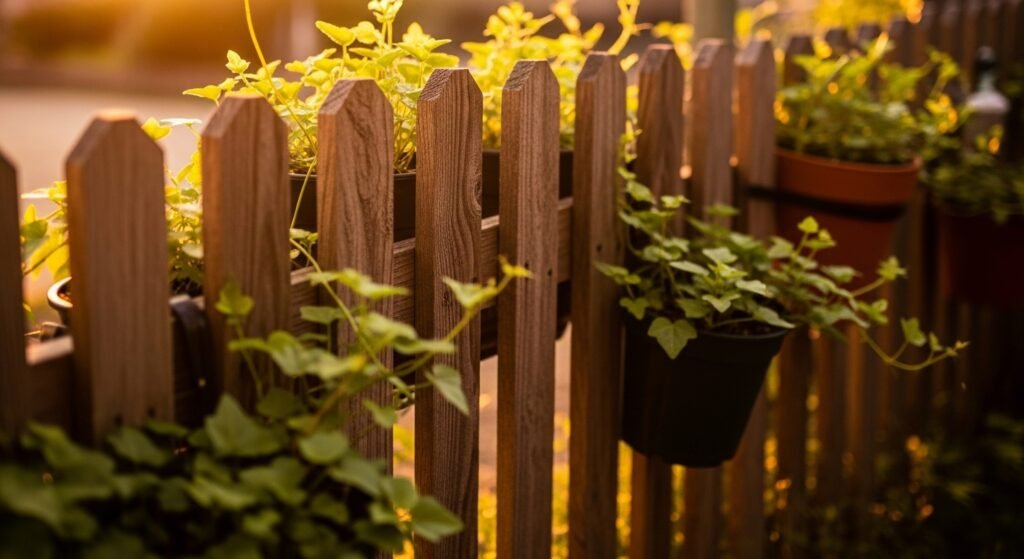
Planters along a fence with trailing vines are one of my favorite small-space tricks – they soften the structure and add instant green. I planted morning glories in narrow boxes once and had to teach myself patience while they climbed, which is honestly good for the soul. If you want privacy, choose denser climbers and give them a little trellis to grab onto.
Backyard Fence Workshop
This scene feels like a friendly reminder that fences can be handmade community projects – grab a friend, a hat, and some iced tea, and build together. I built my first proper fence with my cousin and we turned it into a full-day brunch and work session – and yes, music and biscuits are mandatory. If you’re nervous about tools, pair up with someone more experienced and learn as you go.
How to Actually Make This Work For You
Start by assessing your space and needs before you buy anything – measure carefully, think about sunlight, and decide if privacy, plants, or aesthetics are your main goal, because that changes materials and placement dramatically. Then pick one small section to experiment on so you don’t commit to a whole-yard project you might hate, and keep a minimal toolkit of a drill, level, and good screws which will save you headaches. Finally, embrace imperfections – a slightly uneven fence has character and often saves time and money, plus it makes your space feel lived-in and unique.
What materials are best for small garden fences?
Wood like cedar or redwood is popular because it’s easy to work with and looks warm, while pallets are budget-friendly and versatile; metal panels or wire can give a modern or industrial edge and require less maintenance. Consider your climate – treated wood for damp areas, rust-resistant metal for rainy places – and always check local reuse options for cheaper, sustainable finds.
Do I need permission to build a fence?
It depends – check local building codes and any HOA rules, because setbacks, height limits, and materials are often regulated; even renters should ask landlords before making permanent changes. For small decorative fences or planters, permission is usually easier to get, but always confirm to avoid surprises.
How much will a DIY fence cost?
Costs vary widely – a simple pallet or low wooden rail can be very inexpensive (think under $100 for a small section), while treated lumber, arbors, or metal panels will raise the price into the hundreds or more for larger projects. Budget for tools, fasteners, and finishing touches like stain and plants, and remember that doing it yourself saves labor but not always materials cost.
What are easy plants to pair with a fence?
Vining plants like clematis, morning glory, and sweet peas are forgiving and fast, while boxy planters suit herbs and succulents for low maintenance; choose based on sun exposure. If you want privacy quickly, pick fast-growing shrubs or dense climbers and plan for seasonal care so they don’t overrun your fence.